
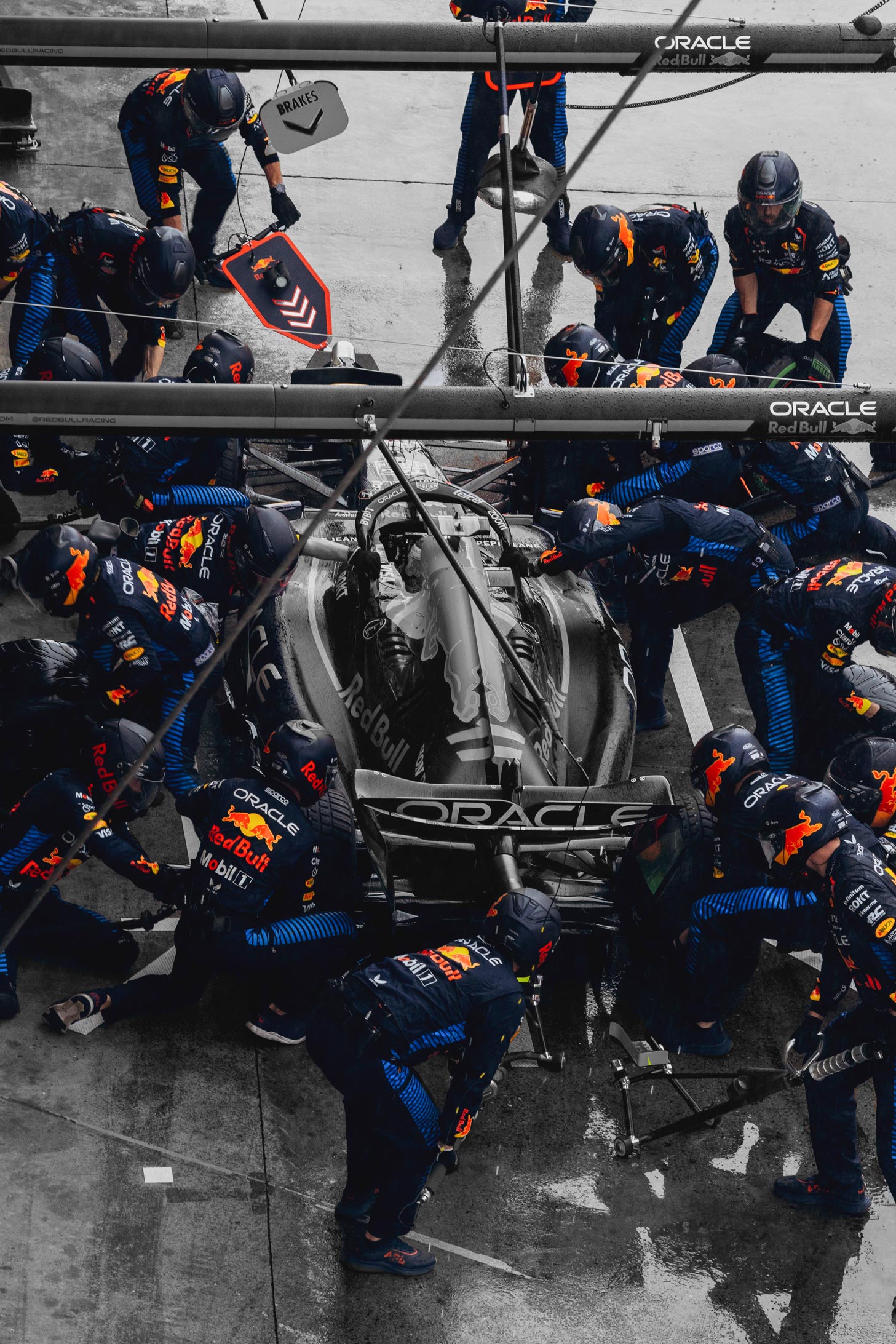
A Formula 1 pit stop takes between 2 and 3 seconds. In that window, up to 20 people change four tires, adjust the front wing, clean the visor, and release the car. No shouting. No confusion about who does what. No one pauses to ask "wait, whose job is this?" And most of what makes it work has nothing to do with cars.
A 2-second pit stop is the difference between winning and losing a race. Teams pour millions into optimizing every variable, and the one that keeps moving the needle is the hardest to engineer: twenty people acting as one, without a single wasted motion. This demands a level of process discipline most operations never develop. Warehouse managers don't race cars, but they face a version of the same problem every single day: multiple people, multiple tasks, time pressure, and real consequences when things go wrong.
Every Second Belongs to Someone
The first thing you notice about a pit crew is that nobody is doing two jobs. One person operates the jack. One person removes a single wheel nut. One person pulls the wheel off. One person puts the new wheel on. That's their entire job, for that entire stop.
In warehouse operations, when a picker also has to answer questions from Quality Control, or a packer is interrupted to help with returns, every handoff gets slower and every error gets more likely. Clear role ownership — knowing exactly where your responsibility starts and ends — gives people a single job they can get genuinely fast at, rather than several they can only ever be adequate at.
In smaller warehouse teams, one person may move between roles across a shift, covering picking in the morning and packing in the afternoon. That's a practical and workable reality. The discipline is in doing one role at a time, with full attention on that stage, before moving to the next.
If you asked ten people on your floor right now to describe exactly where their responsibility starts and where it ends, would you get ten confident, matching answers?
The Handoff Doesn't Improvise Itself
A pit crew doesn't figure out the handoff between "wheels off" and "wheels on" during the race. They've run that exact sequence hundreds of times in practice, usually filmed, usually timed down to the hundredth of a second. By race day, nobody is thinking. They're executing muscle memory.
Warehouses rarely get that luxury of rehearsal, but the principle holds. The handoff points in any warehouse order management workflow — picker to Quality Control, Quality Control to packer, packer to shipper — are exactly where things go wrong when left informal. A "QC will just check it before it ships" arrangement is not a handoff. A defined, consistent step where the item is scanned, the status is confirmed, and the note is logged before the next stage even touches it — that is a handoff.
Good handoff discipline means the next stage always has what it needs before it needs it. Consistent communication at every transition — notes, flags, status updates — means nothing gets assumed and nothing gets dropped.
Discipline Is the Whole Strategy
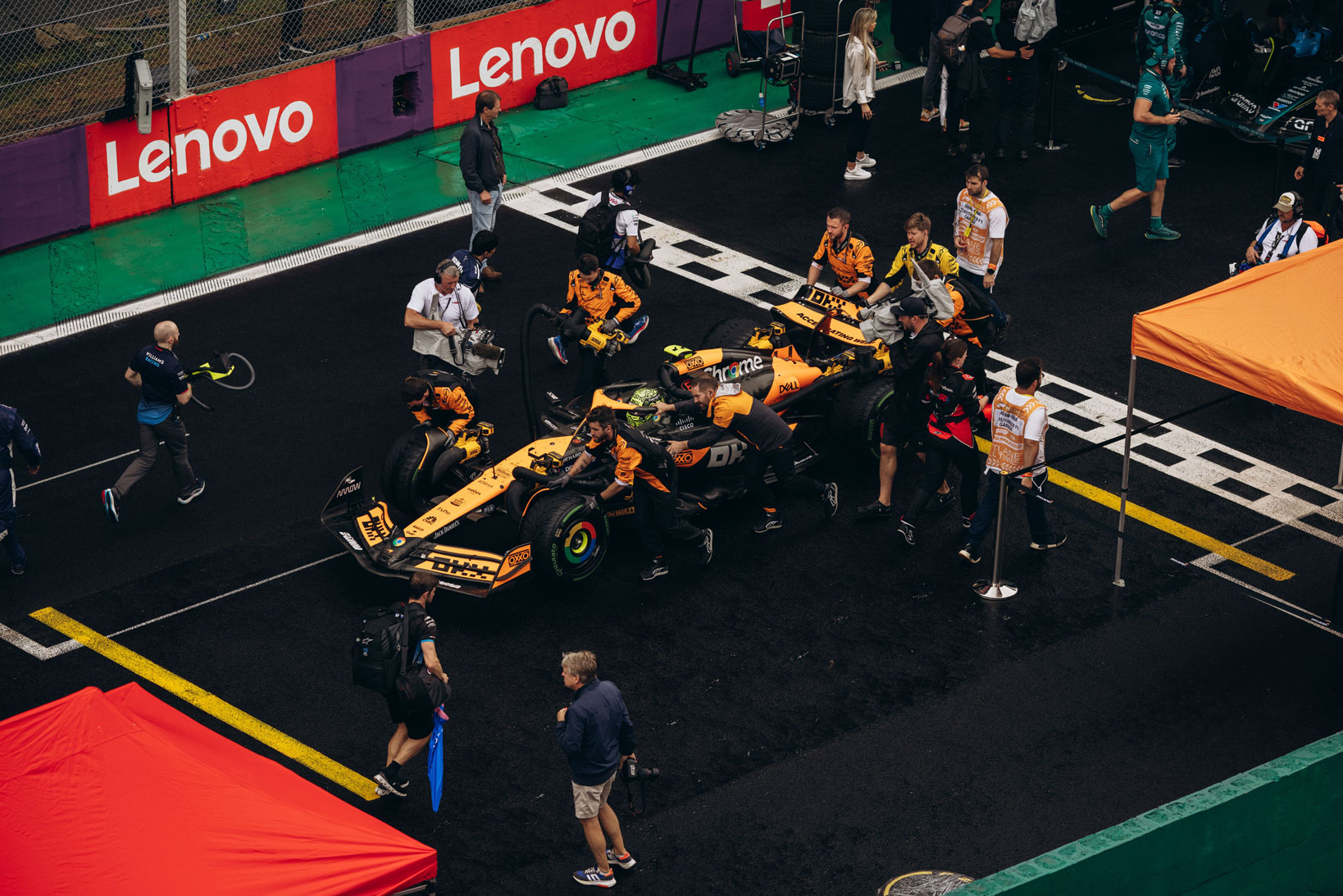
Here's the counterintuitive truth about F1 pit stops: they're boring to execute. The goal is to make every stop identical. The drama you see on screen is the exception — a wheel that didn't lock, a signal that misfired. The target is a stop so routine that nothing dramatic happens at all.
Standardization creates the headroom for speed. When the process is fixed, the team stops spending mental energy figuring out what to do next — they're simply executing. Build the standard warehouse management process. Protect it. Deviate only when there's a clear reason — and document it when you do.
Real-Time Visibility: See It Now, Fix It Now
During a race, the pit wall has a live feed of everything: tire temperatures, lap times, competitor positions, fuel loads. Decisions are made in real time because the data is real time. The team doesn't wait for a post-race debrief to find out what went wrong.
Most warehouse operations teams review performance in broad monthly strokes: total orders shipped, overall error rate. That's useful, but it's not the same as knowing exactly which stage, which shift, or which handoff is quietly costing time every single day. The teams that improve fastest are the ones who can see their own bottlenecks at that level of detail, and who check often enough that small drift gets caught before it becomes a habit.
Real-time visibility in warehouse management starts with knowing, at any given moment, where every order is, who's working on it, and where things are slowing down — without having to ask anyone.
What to Take Back to Your Floor
Honest operations managers ask themselves the same questions a pit crew coach asks after every stop:
- Are roles clear enough that every person knows exactly what they own at any given stage?
- Do handoffs between picking, QC, packing, and shipping carry the information the next person needs?
- Is your standard process actually standard — or does it change depending on who's on shift?
- Can you see what's happening right now, or only find out after the fact?
The gap between a 2-second pit stop and a 12-second one is process. The same is true for the gap between a warehouse that ships accurately and on time, and one that's always catching up.
Get the process right. The speed follows.
On that note: this is more or less what Warevo was built to do. It keeps every order moving cleanly from pick to Quality Control to pack to ship, with clear ownership at every stage and a real-time dashboard so you can see where things stand without asking around. If any of this pit crew talk got you thinking about your own floor, take a look at Warevo.